Mongolia is one of those rare destinations that rewrites your idea of what travel can be. There are no traffic jams here, no queues for the good views, and no Wi-Fi dead zones that feel like a disappointment. The silence alone is worth the flight. With a population of just over 3 million scattered across a country the size of Western Europe, Mongolia offers a scale of wilderness — and a depth of culture — that is simply impossible to find anywhere else on earth.
But where do you begin? If you're planning your first trip, the choices can feel overwhelming. The Gobi Desert, the horse-riding steppes, the ancient monasteries, the nomadic family visits — everything sounds unmissable because, honestly, it is. This guide to the best things to do in Mongolia cuts through the noise and gives you the essential experiences, with practical tips, honest cost estimates, and the best times to visit each one.
1. Sleep in a Traditional Ger
No trip to Mongolia is complete without at least one night — ideally several — sleeping in a ger (pronounced "gair"), the circular felt tent that nomadic families have called home for thousands of years. Step through that small painted door and you step into another world: beds arranged around the walls, a central wood stove, intricate painted furniture in reds and oranges, and the wide sky visible through the smoke hole above.
Two options: Tourist ger camps offer the experience with creature comforts attached — hot showers, a restaurant, a bar. They're ideal for first-timers who want to ease in gently. A nomadic family homestay, on the other hand, means outdoor toilets, no running water, and meals made from whatever is available — but the connection to real Mongolian life is incomparable.
Practical tip: Book tourist ger camps well in advance for July and August. For nomadic homestays, operators like GER to GER Mongolia can arrange family-based stays with a portion of fees going directly to host families.
Best time: June through August for comfort; May and September for smaller crowds.
Cost: Tourist ger camp: $30–80/night (often including meals). Nomadic homestay: typically included in a guided tour, or $15–30/night independently.
2. Attend the Naadam Festival
Every year on July 11–13, the entire nation of Mongolia pauses to celebrate Naadam — the festival of the "Three Manly Games": wrestling, horse racing, and archery. In Ulaanbaatar, the opening ceremony at the National Central Stadium is a breathtaking display of traditional costumes, military pageantry, and cultural performance. In 2026, Naadam falls on July 11–13 and marks the 105th anniversary of the Mongolian Revolution.
The wrestling is pure spectacle: enormous men in tiny shorts and boots moving with surprising grace through nine untimed elimination rounds. The horse races send children — some as young as five — galloping across open steppe for up to 30 kilometers. Archery sees both men and women competing with compound and traditional bows at targets across the field.
Insider tip: Consider attending a countryside (aimag-level) Naadam as well as the main Ulaanbaatar festival. Rural Naadams are smaller, more intimate, and give you direct access to competitors, families, and the celebrations around the edges — airag (fermented mare's milk), buuz (steamed dumplings), and spontaneous ankle-bone shooting games.
Best time: July 11–13 annually (book accommodation months in advance for UB).
Cost: Opening ceremony tickets range from $15–40. Guided Naadam day tours from Ulaanbaatar start around $50–80 per person.
3. Go Horse Trekking Across the Steppe
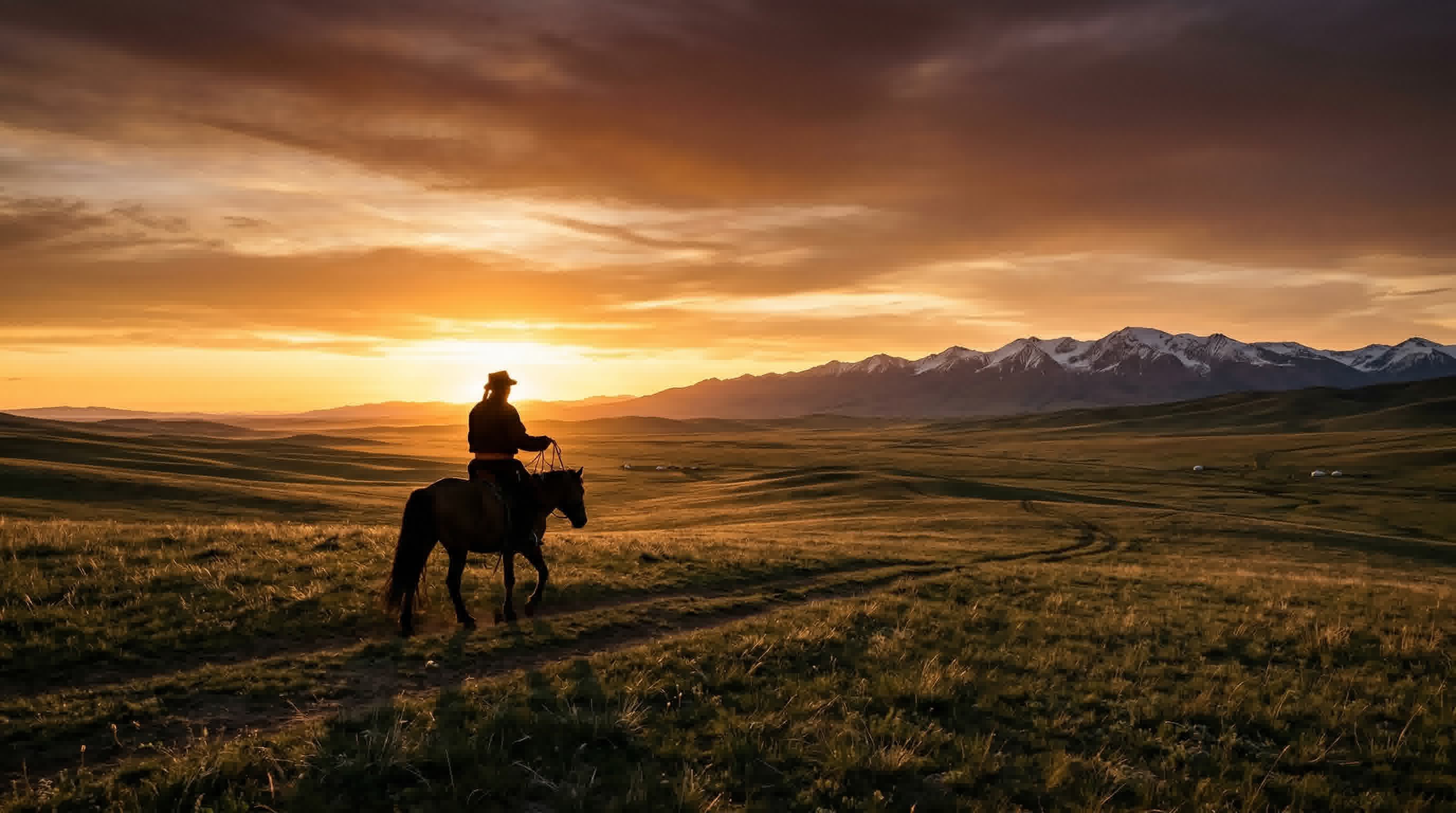
Mongolia has more horses than people, and the bond between Mongolians and their horses runs deeper than any tourist brochure can capture. Children learn to ride at age three. The Mongolian horse is small — more pony-sized than what Western riders expect — but they are astonishingly tough, sure-footed, and built for the terrain.
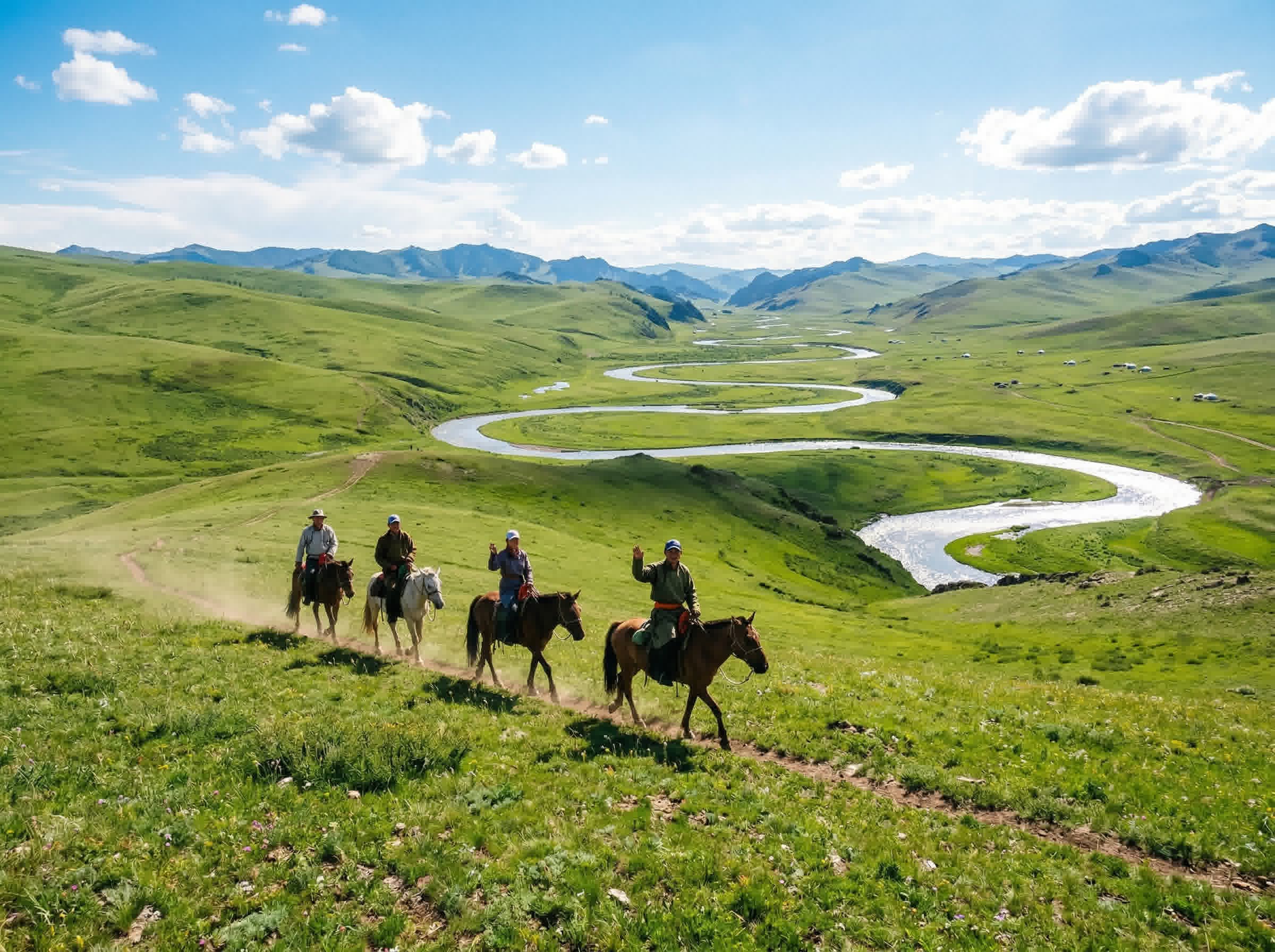
For first-time visitors, a day ride in Terelj National Park or the Orkhon Valley gives you a taste of what horse trekking in Mongolia is all about. For the full experience, multi-day treks through the Orkhon Valley (a UNESCO World Heritage Site), the Khentii Mountains, or around Khuvsgul Lake take you into landscapes with no roads, no fences, and no other travelers — just rolling grassland, river crossings, and nomadic families going about their days.
No experience needed: Mongolian horses are forgiving mounts, and most operators cater to complete beginners. Bring padded shorts or riding tights for multi-day trips, and prepare for some saddle soreness on day two.
Best time: June–September for multi-day treks; May and October for day rides.
Cost: Day rides: $30–80/person. Multi-day guided treks: $80–150/person per day, all-inclusive.
4. Explore the Gobi Desert
The Gobi is the world's fifth-largest desert, but it's nothing like the desert of your imagination. Only a fraction of it is sand — much of the landscape is bare rock, dry valleys, and sweeping plains that stretch to a hazy horizon. What it does have, in abundance, is the kind of silence that makes your ears ring.
The highlights are concentrated in Gobi Gurvan Saikhan National Park: Khongoryn Els, the towering singing dunes that can reach 300 meters high; Bayanzag (the Flaming Cliffs), glowing red at sunset and scattered with dinosaur fossils; and Yolyn Am, a narrow ice gorge that retains its ice field well into summer. Wildlife spotters can look for Bactrian camels, Gobi bears (critically rare), and vast herds of gazelles.
How to get there: The Gobi is roughly a 10-hour drive from Ulaanbaatar, or a short domestic flight. Most visitors join a guided vehicle tour combining several highlights over 5–7 days.
Best time: May–June and September–October (summer temperatures can exceed 40°C).
Cost: 6-day guided Gobi tours typically start around $1,500–2,000 per person all-inclusive.
5. Ride a Bactrian Camel
Once you're in the Gobi, a camel ride across the dunes is not negotiable. The Bactrian camel — with its two humps, shaggy coat, and magnificent disdain for human enthusiasm — is one of Mongolia's iconic animals. Climbing aboard one is a lurching, ungainly process; arriving atop one is genuinely exhilarating.
Camel rides near the Khongoryn Els dunes range from a one-hour sunset ride to a full day traversing the dune field. Early morning and late afternoon offer the best light and the most comfortable temperatures.
Practical tip: Wear long trousers — camel saddles are strapped across the humps and can rub. Camels are generally calm but can be unpredictable if approached from behind.
Best time: May–June and September–October.
Cost: 1-hour camel ride: $10–15. Full-day ride: $50–80.
6. Visit Eagle Hunters in Western Mongolia
In the far west of Mongolia, in Bayan-Ölgii province, Kazakh families still practice the ancient art of hunting with trained golden eagles. The birds — massive, with wingspans up to 2.3 meters — are captured as juveniles, trained over years, and used to hunt foxes and rabbits across the winter steppe. The bond between a hunter and his eagle is extraordinary to witness up close.
Every October, the Golden Eagle Festival brings around 100 eagle hunters together near Ölgii town for a two-day competition of speed, accuracy, and hunter-eagle communication. In September, smaller festivals in Altai and Sagsai village also take place. For 2026, the main Golden Eagle Festival is scheduled for October 3–4.
How to get there: MIAT Airlines flies from Ulaanbaatar to Ölgii three times a week (approximately 2 hours). Book flights early — they sell out months ahead of the festival.
Best time: October for the festival; September–February for the hunting season.
Cost: Festival tickets: $50–60 per person. Guided eagle hunting tours from $2,400 for a 9-day package.
7. Soak in the Tsenkher Hot Springs
After days of riding, hiking, and camping, the natural hot springs at Tsenkher in Arkhangai Province feel like pure luxury. The mineral-rich waters reach temperatures of around 85°C at the source (they're cooled before bathing), and the setting — surrounded by forested hills and rolling steppe — is spectacular. Local ger camps have developed pools and facilities around the springs, making this one of Mongolia's most enjoyable countryside stops.
Tsenkher is typically visited as part of a central Mongolia circuit, combining it with the Orkhon Valley, Karakorum (the ancient capital), and Khuvsgul Lake.
Best time: Year-round, though spring and autumn are particularly atmospheric.
Cost: Entry to the springs: $5–10. Ger camp accommodation nearby: $30–60/night.
8. Spend a Night Stargazing on the Steppe
Mongolia has some of the darkest skies on earth. With minimal light pollution and an average of 257 sunny days per year, the night sky over the steppe is genuinely jaw-dropping. The Milky Way stretches from horizon to horizon. Shooting stars are so frequent that after your first few, they stop feeling remarkable.
You don't need to plan anything special for this — simply being outside a city anywhere in rural Mongolia, on any clear night, delivers the experience. The best conditions are in the high steppe areas of central Mongolia and the Gobi, away from even small town lights.
Best time: August for the Perseid meteor shower; any clear summer or autumn night.
Cost: Free — it comes with every rural ger camp stay.
9. Stay with a Nomadic Family
This is, for many visitors, the most transformative experience Mongolia offers. Staying with a real nomadic family — sharing their food, learning a few words of Mongolian, watching the morning horse-herding routine, drinking bowl after bowl of suutei tsai (salted milk tea) — takes you somewhere that no museum or guided tour can reach.
It is important to go with a guide or through a reputable operator who has genuine relationships with host families, not stage-managed experiences. The Orkhon Valley and Khuvsgul regions are among the most accessible areas for authentic family stays. Operators like GER to GER Mongolia channel up to 80% of payments directly to host families.
What to bring as a gift: Sweets, biscuits, school supplies for children, or small practical items from home. Vodka is traditional but not universal — check with your guide.
Best time: June–September.
Cost: Usually $20–40/night, including meals, when arranged independently. Often included in guided tour packages.
10. Hike in Gorkhi-Terelj National Park
Just 55 kilometers from Ulaanbaatar, Terelj National Park is the easiest taste of Mongolian wilderness for visitors with limited time. The park is famous for its dramatic granite rock formations — including Turtle Rock, an enormous boulder that looks exactly like its name — and its open grasslands, rivers, and forested hillsides.
Hiking trails range from gentle valley walks to the steep climb up to the Aryabal Meditation Temple, perched on a hillside above the park. It's also the most accessible location for ger stays, horse riding, and first meetings with nomadic families for travelers who can't venture further into the countryside.
Best time: May–October.
Cost: Park entrance: $3–5. Day tour from Ulaanbaatar: $50–100 per person.
11. Fish for Taimen in Khuvsgul Lake
Khuvsgul Lake in northern Mongolia — sometimes called the "Blue Pearl of Mongolia" — holds 2% of the world's fresh water and sits at 1,645 meters above sea level, surrounded by forest-covered mountains that rise to the Russian border. It is one of Mongolia's most beautiful places, full stop.
For fishing enthusiasts, the lake and its connecting rivers offer the chance to catch taimen — the world's largest salmonid, a freshwater fish that can exceed 1.5 meters in length. Taimen fishing in Mongolia is strictly regulated (catch and release is mandatory in most areas) and requires local licenses, but for serious anglers it is a bucket-list experience. For everyone else, kayaking, horse riding along the lakeshore, and visits to the Tsaatan reindeer herders further north are compelling alternatives.
Best time: July–September for fishing; all summer for general visits.
Cost: 8-day fishing tours from approximately $1,850–2,000 per person. General Khuvsgul tours: from $1,300 per person for 10 days.
12. Visit Erdene Zuu Monastery and the Ancient Capital of Karakorum
In the 13th century, Karakorum was one of the most important cities in the world — the capital of the Mongol Empire, a place where ambassadors arrived from Europe, China, and Persia. Today, the city is gone, its stones taken to build the Erdene Zuu Monastery in the 16th century, which stands on the same site near the town of Kharkhorin.
Erdene Zuu is enclosed within a vast white wall studded with 108 stupas — 108 being a sacred number in Tibetan Buddhism. Inside, three temples house remarkable collections of thangka paintings, Buddhist sculptures, and manuscripts that survived the Soviet-era purges only just. The site is one of Mongolia's most historically significant, and the monasteries-and-steppe combination makes for extraordinary photography.
Best time: May–September (can be combined with an Orkhon Valley road trip).
Cost: Monastery entrance: $5–8. Day tour from Ulaanbaatar: $80–120 per person.
Planning Your First Trip to Mongolia
The best time to visit Mongolia is between June and September, with July and August being peak season and the time of Naadam. May and September offer smaller crowds and dramatic shoulder-season landscapes. Budget at minimum 10–14 days to cover a meaningful combination of highlights — Ulaanbaatar, the Gobi, the central steppe, and ideally one northern destination like Khuvsgul or Terelj.
Most experiences in this list can be combined into a single itinerary. A circuit of Ulaanbaatar → Terelj → Orkhon Valley → Gobi Desert covers the core. Add western Mongolia (Ölgii) for the eagle festival, or the north (Khuvsgul) for lake and forest experiences.
Planning your first Mongolia adventure? Unveil Mongolia offers curated tours designed to combine the best experiences above — from Gobi Desert explorations and Naadam Festival access to horse trekking and nomadic family stays — with local guides who know these landscapes intimately. Toilogt Resort on Khuvsgul Lake is also a perfect base for northern Mongolia. Get in touch to start planning.