
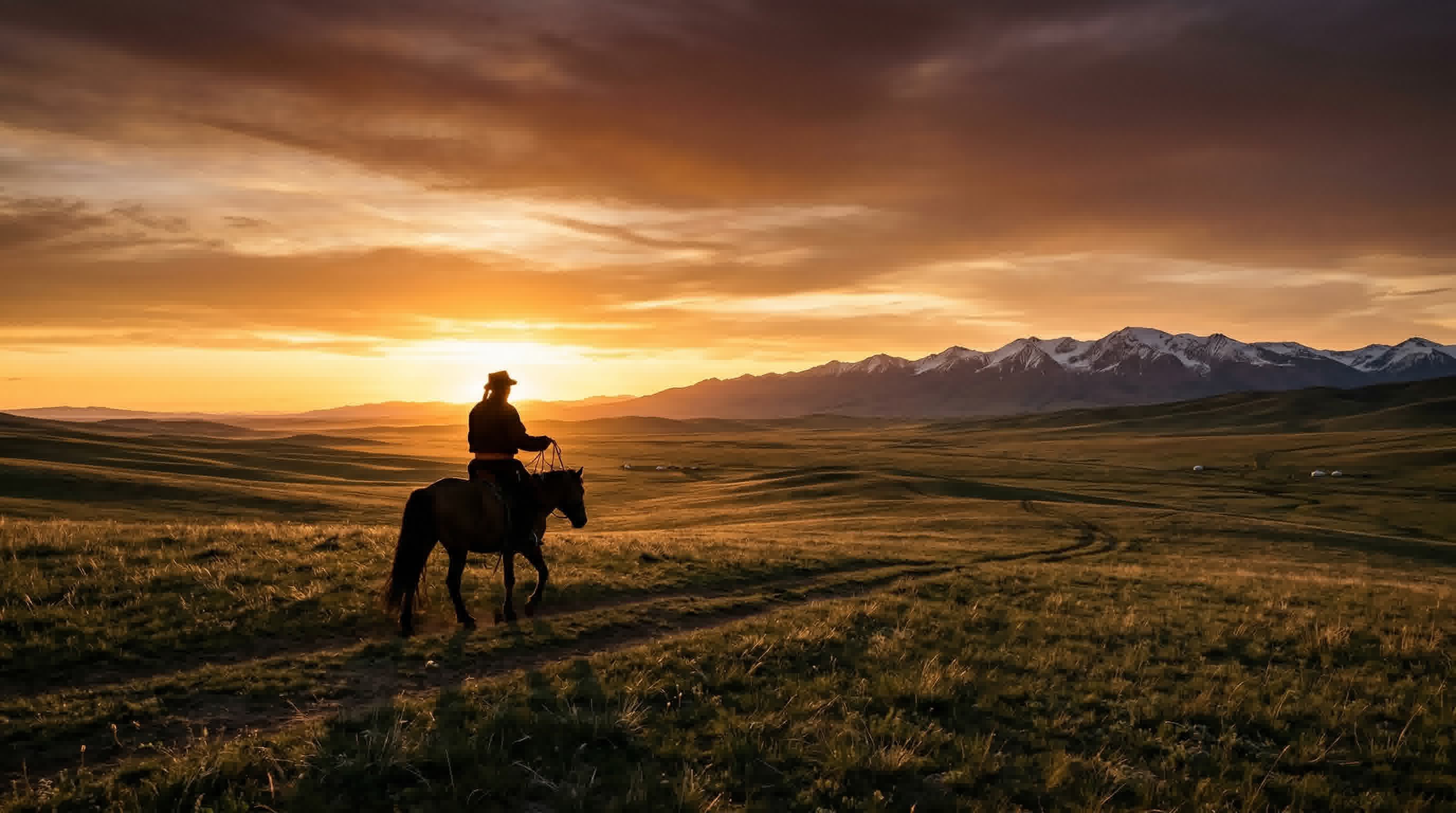
The Gobi Desert does something to people. You arrive expecting desolation and emptiness. What you find instead is a landscape that is relentlessly, almost overwhelmingly alive — with color, with history, with the strange music of wind crossing sand, and with the quiet presence of nomadic families who have called this place home for centuries.
This Gobi Desert travel guide covers everything you need to plan a trip to southern Mongolia's greatest natural wonder: the key attractions, practical logistics, accommodation, costs, and the insider tips that will make your journey genuinely unforgettable.
Why Visit the Gobi Desert?
The Gobi stretches across southern Mongolia and into northern China, covering over 1.3 million square kilometers — making it the fifth-largest desert on Earth. But Mongolia's Gobi is different from the Sahara or the Arabian Desert. Only about five percent of the landscape is sand dunes. The rest is an extraordinary mix of rocky steppe, saxaul forest, eroded canyon lands, and high mountain massifs that catch snow in winter.
Within a single Gobi itinerary, you can stand on cliffs where dinosaur fossils have been discovered since the 1920s, climb a sand dune that sings, hike through a narrow canyon still filled with ice in midsummer, and spend evenings under a canopy of stars so thick and low that the Milky Way looks like a physical thing.
Key Attractions in the Gobi Desert
Bayanzag — The Flaming Cliffs
No stop in the Gobi is more famous or more photogenic than Bayanzag, known internationally as the Flaming Cliffs. The site earned its English name from American paleontologist Roy Chapman Andrews, who led the Central Asiatic Expeditions of the 1920s and watched the last light of day turn the iron-rich sandstone cliffs into what he described as a wall of fire.
Andrews' team made one of the most significant paleontological discoveries of the 20th century here: the first-ever scientifically documented dinosaur eggs, along with specimens of Velociraptor, Protoceratops, Oviraptor, and Pinacosaurus. Over 300 fossils have been unearthed at Bayanzag in the century since. It is illegal to remove any fossil material from the site, but you can walk the 2-kilometer rim trail and often spot exposed fossil fragments in the exposed sandstone.
The cliffs are genuinely stunning at any time of day, but plan to be here for sunset. The orange and red rock ignites under the low sun in a way that photographs can't fully capture.
Practical details:
- Entrance is included in Gobi Gurvan Saikhan National Park fees
- Walking trail approximately 2 km along the rim
- Allow 1.5 to 2 hours minimum
Khongoryn Els — The Singing Dunes
Mongolia's largest and most dramatic sand dunes rise up to 300 meters above the desert floor and extend for approximately 180 kilometers along the edge of the Altai range. The scale is difficult to process until you're standing at the base looking up.
The dunes earn their name from the sound they make — a deep, resonant hum that emerges when wind moves across the ridgeline or when sand shifts on the upper slopes. Locals have called it music for generations.
Climbing the main dune is genuinely challenging: two steps forward, one step back in loose sand, legs burning by the halfway point. Most people take 45 minutes to an hour to reach the crest. The reward — desert stretching to the horizon in one direction, snow-capped Altai peaks in the other, and the silence of enormous space — makes every step worth it.
Camel riding: Local families at the base of the dunes offer Bactrian (two-humped) camel rides, typically priced at around $10–15 USD per hour. A one-hour ride across the base of the dunes at sunset is one of the great experiences of any Mongolia trip.
Practical details:
- Allow at least half a day; a full day if you want to climb the main dune and do a camel ride
- Bring plenty of water — the dunes are hot and exposed
- Sunrise and sunset are the best times for photography and cooler temperatures
Yol Valley (Yolyn Am) — Ice Canyon in the Desert
Yol Valley is perhaps the Gobi's most surprising sight: a narrow granite canyon, deep and perpetually shaded, that contains a corridor of ice well into summer. The canyon is part of Gurvan Saikhan National Park and sits at an elevation of approximately 2,500 meters — high enough that the sun rarely reaches the canyon floor.
The canyon is named for the bearded vulture (yol in Mongolian), and the birds do appear, riding thermals above the 200-meter cliff walls. Below, ibex, argali sheep, and the elusive snow leopard inhabit the mountains. Along the valley floor, the small Pallas's pika — a tiny, round mammal that looks like a plush toy — dart among the rocks.
The hiking trail through the gorge is 10 kilometers round-trip and takes 2 to 3 hours at a comfortable pace. In May and June, the floor is covered in ice, creating surreal conditions: desert heat outside, crampons-worthy ice within. By late July the ice typically melts, but the canyon hiking remains excellent.
Horses can be hired at the park entrance for around $3 per person if you'd rather ride than walk.
Practical details:
- 62 kilometers northwest of Dalanzadgad
- Allow a half-day minimum; a full day recommended
- Visit before July for ice; May–September for best wildlife and hiking conditions
Dinosaur Fossils and Paleontology
The Gobi Desert is one of the world's great fossil hunting grounds, and the concentration of Late Cretaceous dinosaur remains in the southern Gobi is extraordinary. Beyond the Flaming Cliffs, the Natural History Museum in Dalanzadgad houses a collection of regional fossils, and the national museum in Ulaanbaatar contains Mongolia's most impressive specimens including complete Tarbosaurus and Saurolophus skeletons.
Fossils surface at Bayanzag and surrounding areas after heavy rains erode the soft sandstone. While scientific teams continue active excavation here, travelers can experience the landscape where these discoveries occurred.
Dalanzadgad — Your Gobi Base
The capital of Omnogovi Province, Dalanzadgad is the main gateway for Gobi Desert travel. It's a small, functional town with a domestic airport, basic hotels, restaurants, and everything you need to stock up before heading into the desert.
The town has a small but worthwhile natural history museum with regional dinosaur fossils and geological samples. Most organized Gobi tours begin and end here.
Best Time to Visit the Gobi Desert
May and September are the sweet spots for most travelers. Temperatures are warm but manageable (typically 20–28°C during the day), crowds are lighter than peak summer, and the desert light in these months is exceptional.
June through August is peak season. Days are long and warm, making photography and outdoor activities rewarding, but temperatures in July and August can reach 45°C on the dunes and exceed 38°C across the open desert. Plan early-morning and late-afternoon activity, rest in the shade during midday.
October brings cooling temperatures and golden light, but sand storms become more frequent.
Winter (November–March) is harsh but increasingly popular with adventurous travelers. Snow covers the dunes, temperatures drop to -20°C or colder, and you'll have the landscape almost entirely to yourself. Ger camps in the region typically close or operate on limited schedules.
How to Get to the Gobi Desert from Ulaanbaatar
By Air
The fastest and most practical option for most visitors. MIAT Mongolian Airlines and Aero Mongolia operate daily flights from Ulaanbaatar's Chinggis Khaan International Airport to Dalanzadgad. Flight time is approximately 1.5 hours. Tickets run around $80–150 USD each way depending on season and advance booking.
By Road
A long journey — approximately 550 kilometers and 8 to 10 hours in a 4WD vehicle, longer if road conditions are poor. The drive itself is scenic, crossing open steppe and passing through small towns, but it's best reserved for travelers with time and a taste for adventure.
Most organized tours combine a flight one way with a road journey or fly both ways.
What to Pack for the Gobi
The Gobi is a place of extremes, and preparation makes a real difference:
- Sun protection: High-SPF sunscreen, UV-blocking sunglasses, and a wide-brimmed hat. The UV index is intense, especially at elevation.
- Layers: Desert nights are cold even in summer — temperatures drop sharply after dark. A fleece and wind layer are essential.
- Dust protection: A bandana or lightweight face covering is useful during wind events.
- Footwear: Comfortable walking shoes for most sites; sandals or slip-ons for the sand dunes (sand gets searingly hot and fills shoes quickly).
- Water: Carry more than you think you need. There are no shops or resupply points between major sites.
- Camera: The desert light is extraordinary. Protect your equipment from dust and sand.
- Cash: Most ger camps and local services are cash-only. Bring sufficient Mongolian tögrög from Ulaanbaatar; exchange options in Dalanzadgad are limited.
Accommodation: Ger Camps
Staying in a traditional ger camp is not just the most authentic Gobi experience — in the more remote areas, it's the only option. Ger camps across the Gobi range from basic family operations to well-appointed tourist camps with private bathrooms, hot showers, and restaurant service.
A bed in a mid-range tourist ger camp typically costs $25–70 USD per person per night, often including meals. Upscale camps like Three Camel Lodge (near Bayanzag) offer a more luxurious experience at $150–300+ per night.
What to expect in a ger:
- A circular felt tent typically sleeping 2 to 4 people with proper beds
- A central wood stove for warmth at night (attendants re-stoke the fire)
- Shared or private bathroom facilities depending on the camp
- Hearty Mongolian meals: grilled mutton, noodle soups, dairy products
Tour Options and Costs
Independent travel in the Gobi requires significant logistical effort — there's no public transportation between the main sites, and navigating without local knowledge and a reliable 4WD is challenging. Most independent travelers hire a driver-guide in Ulaanbaatar or arrange tours through their hostel.
Guided group tours: The most popular option for first-time visitors. A 5-day Gobi tour (Bayanzag, Khongoryn Els, Yol Valley) with all-inclusive ger camp accommodation, meals, flights, and an English-speaking guide runs approximately $550–900 USD per person depending on group size and operator.
Private tours: Flexible itineraries with your own vehicle and guide. Typically $100–150 USD per person per day for a small group, all-inclusive.
Day trips from UB: Not recommended. The Gobi requires at least 4–5 days to experience properly; the flight time alone makes day trips inefficient.
Practical Tips for the Gobi Desert
- Bargain respectfully at the dunes. Camel rides and horse rentals are negotiable. A polite ask can often reduce prices by 20–30 percent.
- Photograph with permission. Nomadic families are generally welcoming, but always ask before pointing a camera at people.
- Respect the gers. When visiting a nomadic family, knock before entering, accept offered airag (fermented mare's milk) graciously, and sit on the left side of the ger (right is reserved for the family).
- Watch the weather. Sand storms can develop quickly. Your guide will know when to head for shelter.
- Night skies. One of the Gobi's great gifts. No light pollution for hundreds of kilometers in any direction means a Milky Way so vivid it seems close enough to touch. Stay up late.
A Suggested 5-Day Gobi Itinerary
| Day | Highlights |
|---|---|
| Day 1 | Fly UB to Dalanzadgad; check into ger camp near Bayanzag |
| Day 2 | Flaming Cliffs morning tour; afternoon at leisure; sunset at Bayanzag |
| Day 3 | Drive to Khongoryn Els; camel ride; sunset dune climb |
| Day 4 | Bactrian camel ride morning; drive to Yol Valley; canyon hike |
| Day 5 | Return to Dalanzadgad; fly back to Ulaanbaatar |
Ready to Explore the Gobi?
The Gobi Desert is one of those places that changes the way you think about landscape, silence, and scale. A well-planned trip makes all the difference — knowing which camps to stay at, when to be at the dunes, how to find the nomadic families who offer the most genuine encounters.
Unveil Mongolia specializes in Gobi Desert tours with expert local guides, comfortable ger camp accommodation, and the flexibility to tailor your journey to your interests. Whether you're a photographer chasing that golden-hour shot at Bayanzag or an adventure traveler with five days and a spirit of curiosity, the Gobi is waiting.