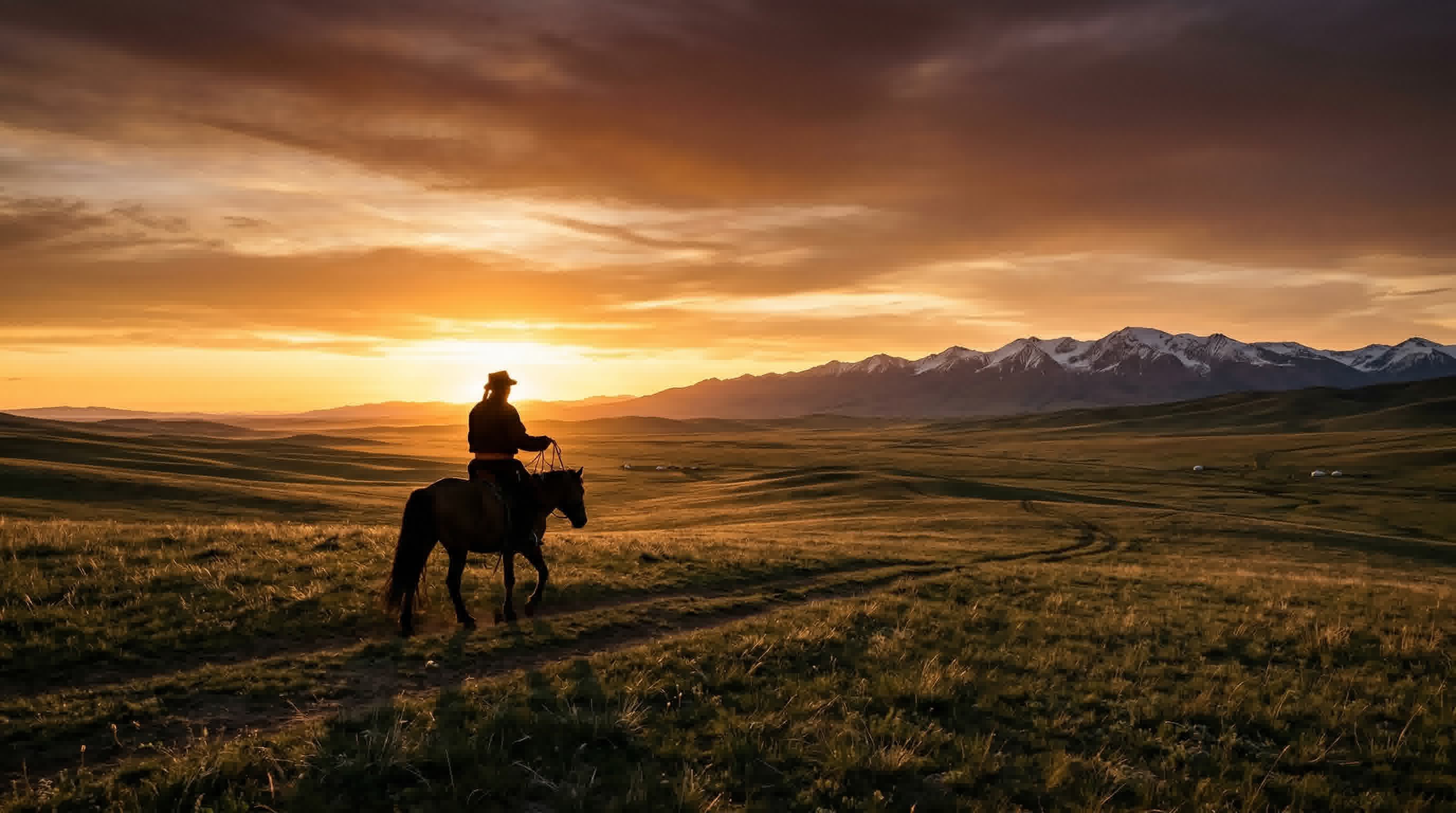
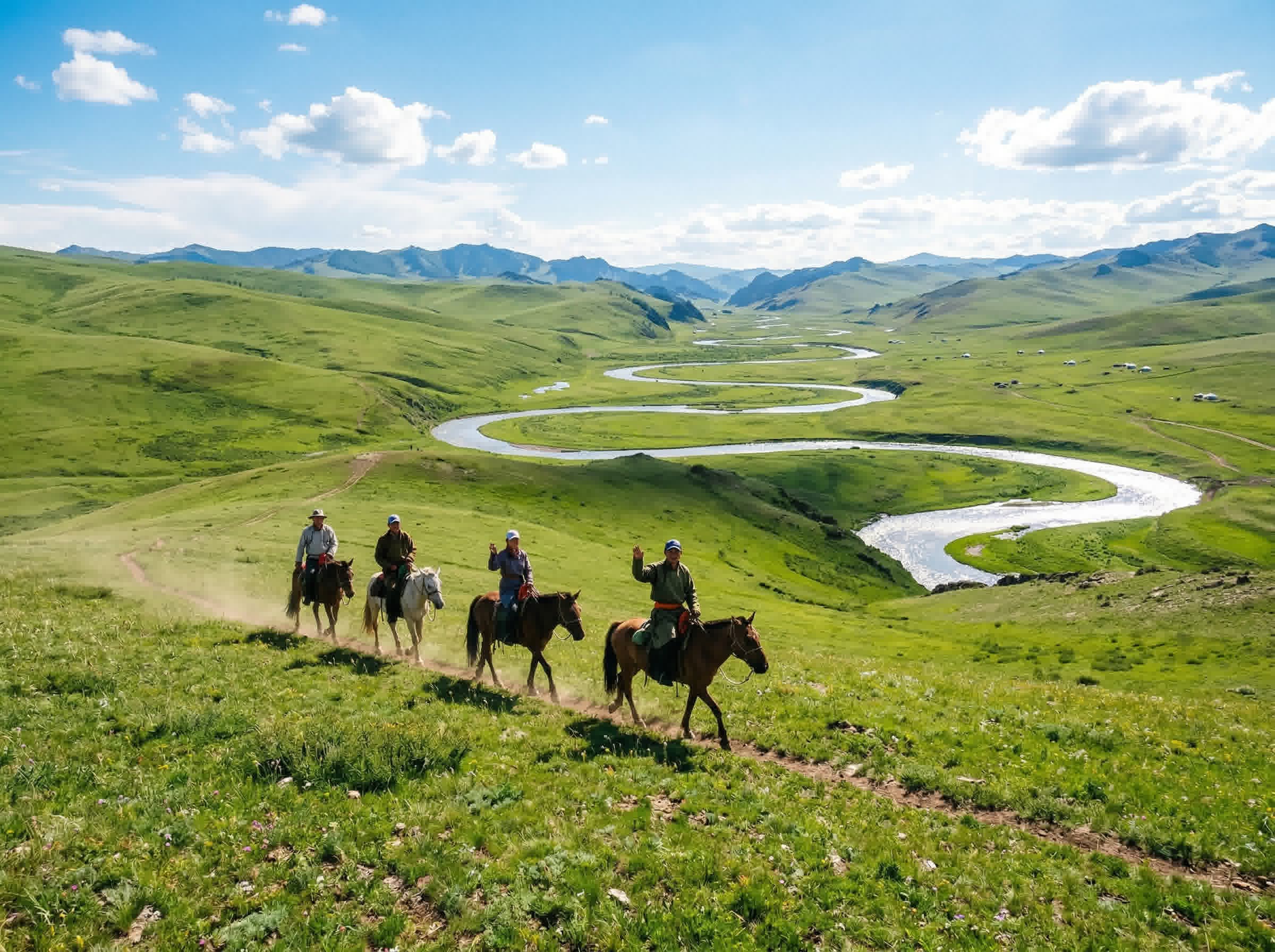
There is a moment, somewhere on your second or third day in the saddle in Mongolia, when it clicks. You've crested a ridge and the valley below unfolds in every direction — green steppe running to the mountains, no fences, no roads, no buildings, just a lone eagle circling above. Your Mongolian horse flicks its ears and drops its head to grab a mouthful of grass. You let it. There is absolutely nowhere you need to be.
Horse trekking in Mongolia is unlike riding anywhere else on earth. The horses are different. The terrain is different. The sense of freedom is different. And the cultural significance of horses to the Mongolian people transforms a simple activity into something far more layered and meaningful.
If you're planning a horse trek in Mongolia — whether a single day out of Ulaanbaatar or a week-long expedition through the Orkhon Valley — here is everything you need to know.
Why Mongolia Is the Best Place in the World for Horse Trekking
Mongolia has more horses per capita than almost any nation on earth. The country's roughly 4 million horses outnumber its human population. They roam semi-wild across the steppe in family herds, and the relationship between Mongolians and their horses is one of the most defining cultural bonds in the world.
Mongolian children typically learn to ride at age three. By five, some are competing in Naadam horse races — galloping 15 to 30 kilometers across open terrain with no saddle guards, minimal equipment, and extraordinary confidence. The herding culture of the steppe depends entirely on horses: for moving camps, for gathering livestock, for covering vast distances of unfenced land.
For the traveler, this deep horse culture translates into something you can feel. Your guide will read horses the way others read weather. The landscape has evolved alongside horse travel — there are no fences, the tracks that exist were made by hooves, and the entire steppe invites forward motion.
The combination of unfenced wilderness, genuine nomadic culture, and horses that know how to handle tough terrain makes horse trekking in Mongolia a genuinely world-class experience.
The Mongolian Horse: Small, Tough, and Completely Unimpressed by You
Before you arrive expecting something like a large European warmblood, adjust your mental image. The Mongolian horse — called takh or simply aduu — stands around 12 to 14 hands high. To Western eyes, it looks more like a sturdy pony than a horse. Don't be deceived.
Mongolian horses are among the toughest riding animals in the world. They've survived on nothing but steppe grass for thousands of years, with no supplemental feed, stabling, or shoeing (they are typically unshod). They navigate rocky mountain passes, river crossings, and boggy ground with a confidence that horses raised in paddocks simply cannot match.
What to expect as a rider:
- The saddle is a traditional wooden Mongolian saddle, or occasionally a modified version for tourist comfort. It sits higher at front and back than a Western saddle and can be hard on the seat bones of the uninitiated.
- Mongolian horses are ridden with a loose rein. They're not always used to the leg-and-hand communication of trained Western horses. Your guide will give you the Mongolian commands (typically clicks and a specific call to go, and a sound to stop).
- They can be quick to spook on windy days and may test riders who lack confidence. Once you find your rhythm together, they're remarkably willing.
Weight limit: Most operators have a weight limit of 90–95 kg (approximately 200–210 lbs) for horse trekking. Check before booking if this applies to you.
Experience Level Required
The short answer: you don't need to be an experienced rider to go horse trekking in Mongolia. The longer answer requires some nuance.
Complete beginners can comfortably handle a half-day or full-day ride with a guide, on flat or gently rolling terrain. Terelj National Park and easy Orkhon Valley day rides are well within reach.
Multi-day treks (3–10+ days) require some riding fitness and ideally some prior experience, but many operators have taken absolute beginners through week-long trips without problems. The key is honest communication: tell your guide your experience level so they can match you with a suitable horse and pace.
Fit and experienced riders will be in their element on long expedition treks, covering 30–40 kilometers per day through mountain passes and river valleys.
Best Horse Trekking Routes in Mongolia
The Orkhon Valley
The Orkhon Valley is Mongolia's most popular and accessible trekking destination, and for good reason. This UNESCO World Heritage Site is a broad river valley flanked by volcanic mountains, ancient monuments, and nomadic family camps. Routes typically run from Karakorum (the ancient capital) south through the valley to the Orkhon Waterfall and beyond.
Multi-day treks here run 5–10 days, covering 20–30 km per riding day. You'll pass through nomadic camps, cross rivers, and camp or stay in ger camps along the route. The terrain is varied but not extreme, making it the ideal choice for first-time trekkers in Mongolia.
Practical: Most operators drive riders out from Ulaanbaatar (5–6 hours) and begin riding from Karakorum or a point in the valley. Return is usually by vehicle.
Around Khuvsgul Lake
The northern shores of Khuvsgul Lake offer some of Mongolia's most dramatic riding scenery: dense forests of larch and pine, mountain ridgelines dropping to the lake, and the extraordinary blue of the water visible from the trails above. Treks here tend to be more technically demanding than the Orkhon, with steeper ascents and longer riding days.
Toilogt Resort on Khuvsgul Lake operates horse riding programs of varying lengths, from a half-day lakeside ride to multi-day treks into the surrounding mountains.
Practical: Fly or drive to Mörön (the nearest town), then transfer to the lake by vehicle. Allow at least 3–5 days to do the area justice.
The Khentii Mountains
For riders who want genuine wilderness and the chance to follow in the footsteps of Genghis Khan's homeland, the Khentii Mountains in northeastern Mongolia are spectacular. This is more rugged terrain — dense taiga forest, fast rivers, and dramatic elevation changes — suited to experienced riders and those comfortable with expedition-style travel.
The region is less visited than Orkhon or Khuvsgul, meaning you're more likely to have river crossings, forest camps, and mountain passes entirely to yourself.
Terelj National Park (Day Rides)
Just 55 km from Ulaanbaatar, Terelj is the most convenient option for a half-day or full-day ride. The landscape is beautiful — rocky formations, open grassland, a river running through — and multiple operators can arrange a guide and horses with little advance notice. It's not the deep steppe experience of longer routes, but it's a genuine and enjoyable introduction.
What to Wear and Pack
Packing correctly for a horse trek in Mongolia significantly affects your comfort. Here's the essential list:
Clothing:
- Riding trousers or padded cycling shorts (inner thigh abrasion is a real issue with traditional saddles)
- Moisture-wicking base layers
- Warm mid-layer — temperatures can drop sharply, especially in the mountains and at altitude
- Waterproof outer layer (afternoon rain showers are common in summer)
- Wide-brimmed hat or riding helmet (some operators provide helmets)
- Gloves — useful in early morning cold and on windy ridges
Footwear:
- Boots with a small heel to prevent the foot slipping through the stirrup. Traditional riding boots are ideal. Trainers are not suitable.
- Bring flip-flops or camp shoes for evenings
Gear:
- Soft-sided bag or duffel (nothing rigid — it goes on the pack horse and needs to be strappable)
- Sunscreen and lip balm — the sun and wind at altitude are fierce
- Insect repellent (mosquitoes are a fact of life around the lakes and rivers in July and August)
- Basic first-aid kit and any personal medications
- Camera — you will not stop photographing
Saddle Soreness: How to Manage It
Nobody tells you about saddle soreness until it's day three and your legs have strong opinions about walking. Here's how to minimize it:
- Get off and walk every hour or two. This is completely normal practice on Mongolian treks and expected.
- Padded shorts make a significant difference under your riding trousers.
- Ibuprofen gel applied in the evening helps with muscle soreness.
- Adjust your stirrups — most saddle discomfort comes from stirrups set too short or too long. Ask your guide to help you find the right position.
- The soreness is typically worst on days two and three, then diminishes as your body adapts.
Safety Considerations
Horse trekking in Mongolia is not a controlled, liability-managed trail ride. You're in remote wilderness, often hours from the nearest town. This is part of the appeal — but it means being sensible:
- Always ride with a guide, at least for your first Mongolia trek.
- Tell your guide about any horse experience (or lack of it) honestly.
- Don't approach horses from directly behind — they kick.
- Wear your helmet if provided, especially on rocky or steep terrain.
- Travel with a guide who carries a basic first-aid kit and knows the area.
- Travel insurance that covers horse riding and medical evacuation is essential.
Multi-Day vs Day Rides: Which Is Right for You?
Day rides (3–8 hours, from $30–80 per person) suit travelers with limited time, those new to horses, or those visiting Terelj or the Orkhon on a short Mongolia trip. They're accessible, affordable, and give you a real taste of Mongolian horse culture without the commitment.
Multi-day treks (3–14 days, from $80–150/person per day all-inclusive) are the full experience. They take you into genuine wilderness, facilitate deep cultural encounters, and build the kind of riding confidence that changes how you see the landscape. Most visitors who do multi-day treks describe them as the highlight of their Mongolia trip.
Costs
- Horse rental only (bring your own guide): $20–40/day
- Guided day ride with horse: $30–80/person
- Guided multi-day trek, all-inclusive: $80–150/person per day (food, ger accommodation or camping, guide, horse, pack horse)
- Organized tour packages (e.g., 9-day Orkhon Valley trek): approximately $1,500–2,000 per person
- Specialist expedition companies (Stone Horse, Equus Journeys): $2,000–3,000+ for 10–14 day rides
Budget travelers who speak some Mongolian or travel with a local guide can arrange treks much more cheaply by going directly with nomadic families in areas like Karakorum or Khuvsgul.
Best Operators and Tour Companies
Several operators specialize in Mongolia horse trekking:
- Stone Horse Expeditions — based in Ulaanbaatar, runs multi-day expedition treks with a strong reputation for experienced riders
- Nomad Trail Mongolia — good for beginners and customized itineraries
- Equus Journeys — international tour operator with Mongolia-specific riding holidays
- GER to GER Mongolia — combines cultural homestays with horse trekking
- Toilogt Resort (Khuvsgul) — a well-regarded lakeside resort with guided horse riding programs on the shores of Khuvsgul Lake, used in Unveil Mongolia's Khuvsgul itineraries
When to Go for Horse Trekking in Mongolia
Peak season: June–August. The steppe is green, the weather is mostly warm, the days are long, and Naadam (July 11–13) can be combined with an Orkhon Valley trek. Expect more fellow travelers at popular camps.
Shoulder seasons: May and September–early October. Smaller crowds, dramatic light, and cooler temperatures that suit horses and riders alike. September in particular is many guides' favorite month.
Off-season: Winter horse riding is possible but only recommended for experienced riders and those specifically seeking it. Cold temperatures (down to -30°C) require specialist gear and preparation.
The Cultural Dimension
When you trek on horseback through Mongolia, you're not just moving across landscape — you're connecting with 3,000 years of nomadic history. Every nomadic family you pass, every herder who waves from a distance, every child who gallops over to say hello on a horse twice their size: it all speaks to a way of life in which the horse isn't a leisure activity but a fundamental tool of survival and culture.
Take time with your guide to learn about the horses themselves: their names (Mongolian horses are named by color and marking), their hierarchy within the herd, the significance of the hadag (blue silk scarf) tied to a horse's neck on ceremonial occasions. Ask about the Naadam horse races and the jockeys — those children of five and six who ride without fear.
The riding is extraordinary. The culture around it is even more so.
Planning a horse trekking trip to Mongolia? Unveil Mongolia designs custom tours that combine multi-day rides through the Orkhon Valley and Khuvsgul region with authentic nomadic culture, Naadam access, and stays at Toilogt Resort on Khuvsgul Lake. Contact us to start building your itinerary.