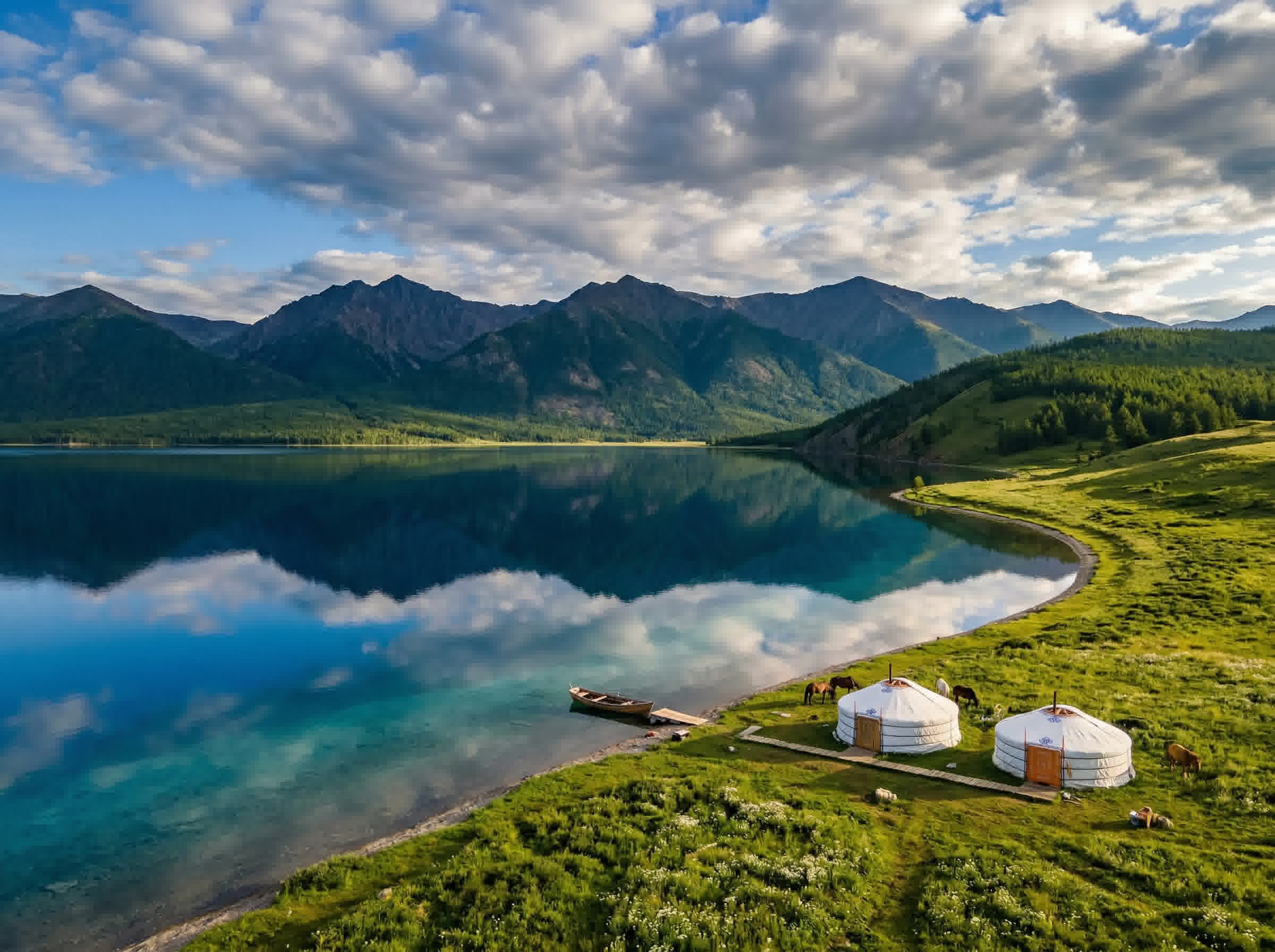
There's a moment when you crest the final ridge before Khuvsgul Lake and the water comes into view — impossibly blue, impossibly still, surrounded by mountains and pine forest so intact it seems like the land was put together yesterday. Mongolians call it "Dalai Eej," meaning Mother Ocean. The world calls it the Blue Pearl of Mongolia. Both names are right. Lake Khuvsgul is the largest freshwater lake in Mongolia by volume, holding roughly 70 percent of the country's fresh water and about 0.4 percent of the world's entire freshwater reserve. It sits at 1,645 meters elevation in the far north of the country, just 200 kilometers south of the Russian border, cradled by the Sayan Mountains and surrounded by Siberian taiga forest. Its maximum depth is 262 meters — making it one of the deepest lakes in Asia. But statistics only tell part of the story. What makes Khuvsgul special is the convergence of extraordinary natural beauty with cultural richness: the lake itself, the surrounding wilderness, and — in the taiga to the west — the Tsaatan people, one of the world's last reindeer-herding communities.
Why Khuvsgul Is Called Mongolia's Blue Pearl
The name is visual truth. The lake's extraordinary clarity — you can see the lake floor in shallow areas, and the deep water shifts through shades of azure and cobalt depending on the sky and season — combined with its setting amid forest and mountain gives it an almost unreal luminosity. The lake was formed approximately 4–5 million years ago as part of the same geological rift system that created Lake Baikal in Russia. Its water is carbonate-rich and exceptionally pure; local communities have drunk directly from the lake for generations (though this is no longer recommended near the increasingly popular southern shore). No major rivers from populated areas flow in, and the lake's single outflow — the Eg River — drains northward toward Lake Baikal. In summer, the water appears jewel-bright against the deep green of the surrounding larch and pine forest. In winter, the lake freezes solid enough to drive a truck across. Both seasons produce their own kind of magic.
Size and Geography
- Length: 136 kilometers
- Width: 20–40 kilometers
- Maximum depth: 262 meters
- Elevation: 1,645 meters above sea level
- Surface area: 2,760 square kilometers
- Surrounding park: Khuvsgul National Park (70,000 km², established 1992)
The lake is bounded to the north by the Sayan Mountains (rising above 3,400 meters), to the west by taiga forest, and to the south and east by open steppe. Four small islands sit in the middle of the lake, considered sacred by local and Mongolian Buddhist tradition. Ovoo (stone cairns adorned with blue cloth offerings) mark the lakeshore at intervals.
Activities at Lake Khuvsgul
Horseback Riding
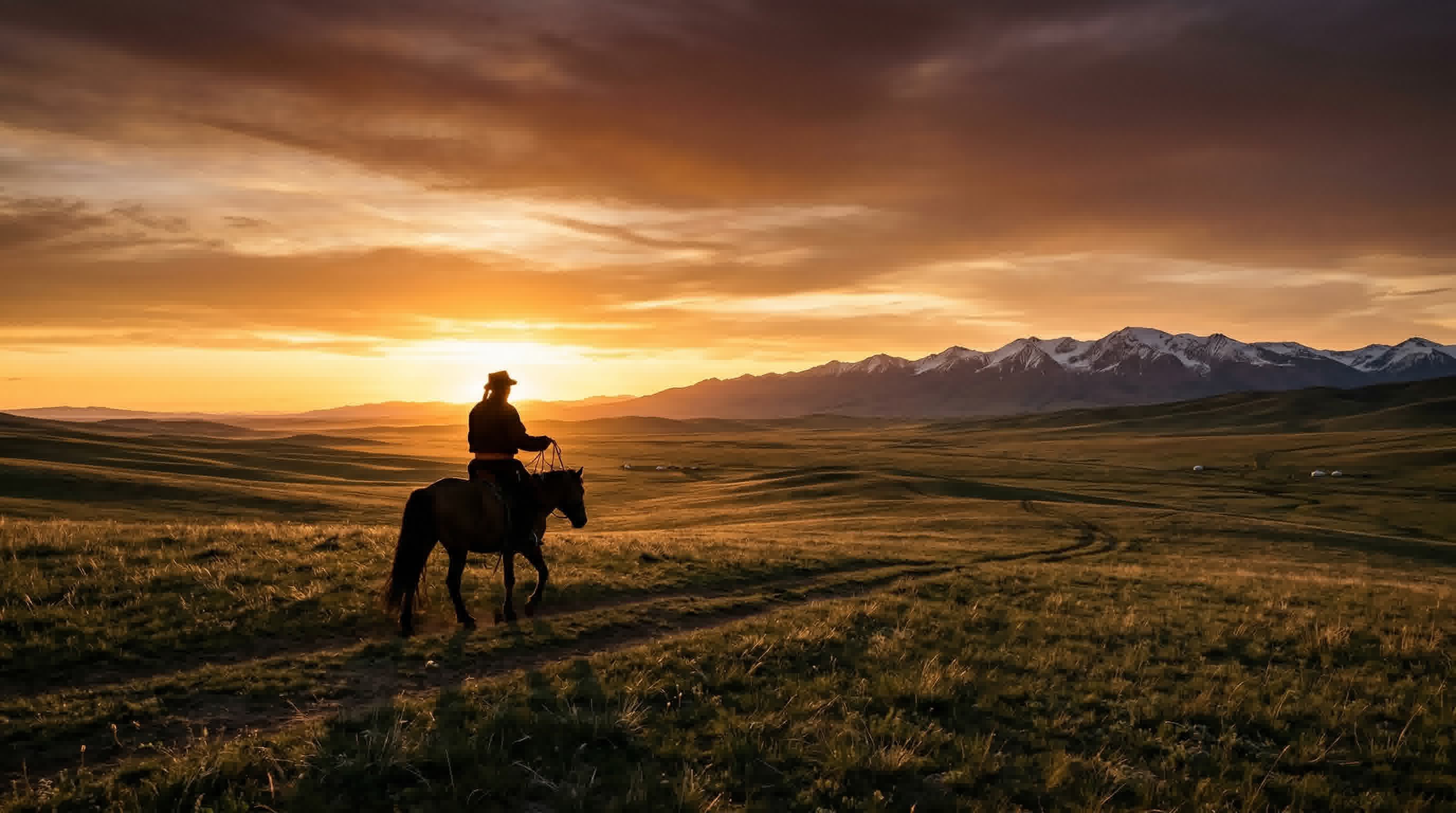
The most traditional and beloved way to explore the lake region. Horses can be hired at Khatgal and at several ger camps along the lakeshore for approximately $15–25 USD per hour or $40–60 per day with a guide. Trails lead along the western shore through forest, with views of the lake appearing and disappearing through the trees. Experienced riders can arrange multi-day horseback trips deeper into the national park, including routes to the northern shore and into the Darhad Valley toward reindeer herder territory.
Kayaking and Boat Trips
The calm, clear water of Khuvsgul is ideal for kayaking. Kayak rentals are available from several ger camps near Khatgal, typically priced at around $5–10 USD per hour. The experience of paddling on water this clear and this blue, with mountain reflections on the surface and the forest shore close by, is exceptional. Longer boat trips — a half-day or full-day tour on the historical Sukhbaatar ship or a smaller tourist vessel — are available from Khatgal and offer sweeping views of the lake that are impossible to achieve from shore. Prices vary by operator and season; expect $20–50 USD for a half-day tour.
Hiking
Khuvsgul National Park has excellent hiking with a range of difficulty. Options include:
- Lakeshore walks: Gentle paths follow the shoreline north from Khatgal through mixed forest. Many ger camps have marked trails from their property.
- Munkh Saridag Peak: The highest point in the region at 3,491 meters requires a multi-day trek and local guide, but the summit views over the lake and Russian border are spectacular.
- Forest hikes to viewpoints: Several trails rise from the lakeshore into the surrounding hills, providing elevated views over the blue expanse.
Swimming and Water Activities
Khuvsgul is genuinely cold — water temperatures rarely exceed 15°C even in peak summer — but hardy visitors do swim. The water is clean and the experience of swimming in a lake of this clarity and beauty is memorable. Stand-up paddleboarding is increasingly available at some camps.
Winter Activities
Lake Khuvsgul transforms in winter into a completely different destination. From December to late April, the lake freezes to ice thick enough to drive a vehicle across (though this should only be done with experienced local drivers who know the safe routes). Local people from the north shore drive on the frozen lake to reach Khatgal rather than navigating the difficult winter roads. The Blue Pearl Ice Festival takes place annually in the first week of March. The festival celebrates Mongolia's winter culture with traditional sports, horse sled races, ice skating, and impressive ice sculptures — all on the frozen surface of the lake. It is one of Mongolia's most spectacular winter events. Ice fishing is possible throughout the frozen season, with access holes cut by locals who fish for the lake's endemic species including Siberian grayling, Baikal omul, and lenok.
Meeting the Tsaatan Reindeer Herders
One of the most profound experiences available in the Khuvsgul region — and in all of Mongolia — is visiting the Tsaatan people (also called Dukha), the world's last remaining reindeer-herding nomads. Numbering only around 300–400 individuals, the Tsaatan live in the high taiga forest west of Khuvsgul Lake, moving with their herds of reindeer through the seasons. The Tsaatan live in traditional teepee-style tents (urts) rather than Mongolian gers, reflecting their Tuvan cultural heritage. Their lives are built around their reindeer: the animals are ridden rather than driven (they're too small to pull a heavy sled), provide milk for dairy products, and are central to Tsaatan spiritual life and cultural identity. To reach the Tsaatan communities in the Zuun Taiga (East Taiga) or Baruun Taiga (West Taiga) areas, visitors travel beyond Khatgal to Tsagaan Nuur soum, then ride horses or reindeer for a further few hours into the taiga. This cannot be done independently — you need a local guide with existing relationships with the families. Visiting responsibly: The Tsaatan community is small, their lifestyle is fragile, and mass tourism poses real risks. Choose operators who have genuine relationships with specific families, limit group sizes, and ensure that income from tourism reaches the families directly. A respectful visit — bringing gifts of flour, rice, or tea, not imposing on the families' schedules — is one of the most enriching experiences Mongolia offers.
Eco-Tourism and Conservation
Khuvsgul National Park was established in 1992 specifically to protect the lake's watershed and biodiversity. The park encompasses an extraordinary range of ecosystems: Siberian taiga forest, alpine meadows, steppe, and the lake itself. Wildlife in and around the park includes Siberian brown bear, wolf, elk, Siberian roe deer, argali sheep, lynx, sable, and over 200 species of birds. The lake itself harbors several endemic and rare fish species. Conservation challenges are growing. Increasing tourism pressure on the southern shore near Khatgal has led to littering, waste management problems, and soil erosion around popular camping spots. Several initiatives are underway:
- Park entrance fees help fund management and ranger presence
- Community-based tourism programs channel tourism revenue into local families and conservation
- Leave No Trace principles are increasingly promoted by responsible operators
The most responsible way to experience Khuvsgul is to stay at well-managed ger camps that follow proper waste disposal practices, keep groups small, stick to marked trails, and not disturb wildlife or sacred sites.
Best Time to Visit Lake Khuvsgul
Summer (June–August): Peak season and the most popular time. The landscape is at its greenest, days are long (up to 16 hours of daylight), temperatures are pleasant (18–25°C during the day), and all activities — horseback riding, kayaking, hiking, boat trips — are available. Expect the highest visitor numbers and accommodation prices. Late Spring (May): Wildflowers bloom across the meadows, migratory birds arrive in force, and crowds are minimal. Nights are still cold (near freezing), but days are beautiful. Autumn (September–October): The larch forest turns gold and rust, creating stunning colors against the blue water. Temperatures are cooling, crowds thin out significantly, and the lake has a more brooding, atmospheric quality. An excellent time for photography and hiking. Winter (December–April): For adventurous travelers only, but deeply rewarding. The lake freezes completely, the landscape is pure white, and the Blue Pearl Ice Festival in early March is one of Mongolia's most memorable events. Dress in serious cold-weather gear; temperatures regularly reach -25 to -35°C.
How to Get to Lake Khuvsgul
Step 1: Ulaanbaatar to Murun
By air: Fly from Ulaanbaatar's Chinggis Khaan International Airport to Murun (Mörön), the capital of Khuvsgul Province. Flight time is approximately 1.5 hours. Aero Mongolia and MIAT Mongolian Airlines operate this route; tickets typically cost $100–180 USD each way. Advance booking is essential in summer. By road: Approximately 750 kilometers from Ulaanbaatar; a 14–18 hour drive through central and northern Mongolia. This is a serious undertaking and best left to experienced independent travelers or those on a multi-week itinerary.
Step 2: Murun to the Lake
Murun is approximately 100 kilometers from Khatgal, the main village on the southern shore of Khuvsgul. The drive takes 1.5 to 2 hours by 4WD. Shared jeep-vans (furgon) run between Murun and Khatgal when full, typically departing from Murun's central market area. The fare is around $5–8 USD per person. Organized tours from Ulaanbaatar typically include transport from Murun to the lake as part of the package.
Where to Stay at Lake Khuvsgul
Ger Camps
The standard accommodation option at Khuvsgul. Dozens of ger camps operate along the southern shore between Khatgal and the wider park. Quality ranges from basic backpacker camps ($15–25 per person per night) to well-equipped tourist camps with private bathrooms, hot showers, and restaurant meals ($40–80 USD per person per night, often including meals).
Toilogt Ger Resort
For those seeking a premium Khuvsgul experience, Toilogt Ger Resort is one of the most established and well-regarded accommodations on the lake — a long-running property that has been welcoming guests for years. Set right on the lakeshore with stunning water views, Toilogt offers a combination of traditional standard gers and a comfortable lodge with 20 beds. Activities organized from the resort include horse riding through the surrounding forest, kayaking on the lake, guided hikes, and boat trips. Its attentive, personal service sets it apart from larger commercial camps. It's an ideal base for those who want both comfort and genuine local connection. Toilogt can be incorporated into Unveil Mongolia's Khuvsgul tour packages.
Khatgal Village
The main village at the southern tip of the lake has basic guesthouses and a few small hotels for budget travelers. It's a useful resupply point and has restaurants, a small market, and equipment rental for independent visitors.
Practical Tips for Visiting Khuvsgul
- Mosquitoes: The taiga forest around the lake can be intense with insects in June and July. Pack strong repellent and bring a head net.
- Water: The lake water was historically safe to drink, but with increased tourism pressure near Khatgal, it's safest to purify or filter water before drinking.
- Cash: Bring sufficient cash (tögrög) from Ulaanbaatar or Murun. ATM availability at the lake is unreliable.
- Connectivity: Cell signal is variable at the lake. Embrace the digital detox.
- Altitude: At 1,645 meters, take it easy on the first day if you're coming from sea level.
- Sacred sites: Ovoo cairns and other sacred sites around the lake are meant to be respected, not climbed or disturbed. Walk around them clockwise if you pass near them.
Planning Your Khuvsgul Journey
Lake Khuvsgul is a place that earns its reputation every time. Whether you spend three days on the lakeshore doing gentle hikes and kayak trips, or venture deeper into the taiga to meet the Tsaatan people, this is one of those rare destinations that delivers on every level — natural beauty, cultural richness, and the particular peace that comes from being in a place where the human footprint is still light. Unveil Mongolia offers dedicated Lake Khuvsgul tours including stays at Toilogt Ger Resort, guided Tsaatan reindeer herder visits, and multi-day itineraries combining Khuvsgul with the broader central Mongolia circuit. Their roots in the lake region mean thoughtful, well-paced itineraries and genuine local connections across the north.