
Why Mongolia Should Be Your Next Big Adventure
There are countries you visit, and then there are countries that rearrange something inside you. Mongolia is the latter.
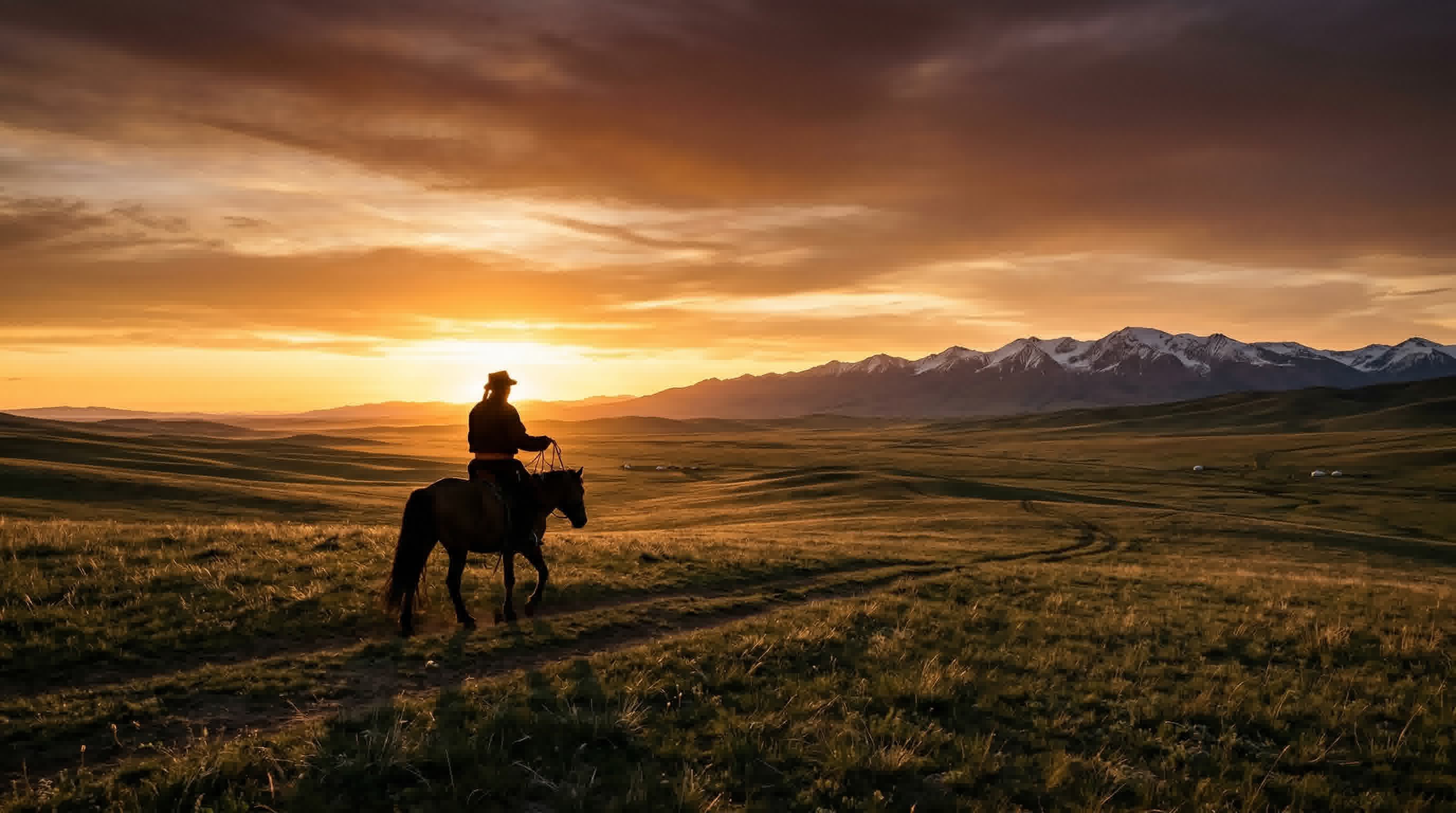
Picture this: you wake up in a circular felt tent as the sun rises over an endless steppe. Outside, a nomadic family is already up, tending to their horses. The sky is that particular shade of impossible blue — a blue so pure and vast that Mongolians named their country "the Land of Eternal Blue Sky." There is no road visible in any direction. No power lines. No other buildings. Just you, the grasslands, and 1.5 million square kilometers of some of the most untouched wilderness on Earth.
This is what makes Mongolia different from every other destination on the planet.
In 2026, Mongolia is experiencing its most exciting moment for travelers. New direct flight routes, paved roads connecting all 21 provinces to the capital, upgraded ger camp infrastructure, and a government "Years to Visit Mongolia" campaign extending through 2028 have made this incredible country more accessible than ever — without sacrificing the raw, untamed nature that defines the experience. The country crossed one million international arrivals for the first time by mid-2026, yet the vast majority of its landscape remains breathtakingly empty.
This guide covers everything you need to plan your Mongolia trip: when to go, where to go, how to get around, where to sleep, what to eat, and how to build the perfect itinerary whether you have 7 days or 21.
When to Visit Mongolia in 2026
Mongolia has four distinct seasons, and the timing of your visit will fundamentally shape your experience.
Summer (June–August): Peak Season and the Best Overall Time
Summer is when Mongolia is at its most inviting. Temperatures average 25–32°C during the day, landscapes turn lush and green, nomadic families are in full activity with their herds, and ger camps across the country are open and fully operational.
June is arguably the hidden gem of the travel calendar — beautiful weather, far fewer crowds than July, and wildflowers blanketing the steppe. If you don't need to see the Naadam Festival, June is the smart play.
July brings Naadam, Mongolia's most spectacular national event. The festival runs July 11–15, 2026, with the main opening ceremony at Ulaanbaatar's National Central Stadium on July 11. This celebration of the "Three Manly Sports" — wrestling, archery, and horse racing — draws the entire nation and delivers a cultural experience unlike anything else in Asia. Be warned: hotel prices in Ulaanbaatar can double around July 10–12, and flights book up months in advance. Book everything by March if you plan to attend Naadam.
August remains high season with warm weather and still-green landscapes, though the nights start cooling noticeably by mid-month.
Autumn (September–October): Shoulder Season with Golden Light
September is a beautiful and underappreciated time to visit. Crowds thin, temperatures are crisp and manageable (cooling to single digits at night by late September), and the steppe turns golden. The Golden Eagle Festival — held the first weekend of October in Ulgii, western Mongolia — is one of the world's most visually stunning cultural events, where Kazakh hunters demonstrate the ancient UNESCO-listed art of hunting with golden eagles. It's extremely popular now, so book flights to Ulgii from Ulaanbaatar well in advance (flights are frequently full).
Winter (November–March): For the Adventurous
Ulaanbaatar is the world's coldest capital city, and winters here are serious — temperatures regularly reach -30°C. That said, winter Mongolia has a dedicated and growing following. The Ice Festival at Lake Khövsgöl (March) and Tsagaan Sar (Mongolian Lunar New Year, in January or February depending on the lunar calendar) offer genuinely unique cultural immersions with almost no other tourists in sight. The Gobi Desert in snow is an otherworldly experience. But go prepared: air pollution in Ulaanbaatar worsens significantly in winter due to coal heating, and some remote areas become inaccessible.
Spring (April–May): Generally Avoid
Spring brings dust storms, cold and unpredictable weather, and a country still waking up from winter. Most ger camps are just opening, logistics are trickier, and the landscapes are still brown and bare. Unless you have a specific reason to go in spring, it's the weakest season for travel.
Quick Season Summary:
- Best overall: June and August (fewer crowds than July, great weather)
- Best for culture: July (Naadam), October (Golden Eagle Festival), February (Tsagaan Sar)
- Best for adventure: September–October, or winter for true explorers
- Avoid: April–May for most travelers
Top Destinations in Mongolia
Ulaanbaatar: Gateway to the Steppe
Most visitors spend 1–2 days in Ulaanbaatar (or "UB") at the start or end of a trip. It's a chaotic, fascinating city of contradictions — Soviet-era concrete blocks alongside Buddhist monasteries, cashmere boutiques next to Soviet monuments, sleek modern hotels in the shadow of ger districts.
Must-see in Ulaanbaatar:
- Gandantegchinlen Monastery (Gandan): Mongolia's largest and most active Buddhist monastery, home to a breathtaking 26.5-meter indoor statue of Avalokitesvara containing 2,286 precious stones. Morning ceremonies start early and are free to observe.
- National Museum of Mongolia: The best single place to understand 800,000 years of Mongolian history, from prehistoric nomads to the Mongol Empire and beyond.
- Sukhbaatar Square: The ceremonial heart of the city, flanked by the parliament building and the imposing Chinggis Khan colonnade. Worth a visit in the evening when locals gather.
- Bogd Khaan Winter Palace Museum: The residence of Mongolia's last king, with six ornate temples containing extraordinary Buddhist art and royal artifacts.
- Choijin Lama Temple Museum: A stunning early 20th-century temple complex now preserved as a museum, with some of the finest Buddhist sculpture and mask collections in Central Asia.
Practical UB Tip: Get a local SIM card at the State Department Store (5th floor — Unitel or MobiCom both work well, around 20,000 MNT for a tourist plan). Exchange currency at the kiosks near the State Department Store (3rd floor) or near the Holiday Inn for the best rates. The official exchange rate as of early 2026 is approximately 3,400–3,500 MNT per US dollar.
Gorkhi-Terelj National Park: The Perfect First Taste
Located just 60–80 km east of Ulaanbaatar, Terelj is many travelers' introduction to Mongolia's countryside — and it delivers. Dramatic granite rock formations, forested mountain valleys, the famous Turtle Rock formation, and the hilltop Aryabal Meditation Temple define the landscape. Nomadic families with horses and gers dot the valleys.
Terelj is ideal for a 1–2 day trip from UB. You can hike, horseback ride, camp by the Terelj River, or simply sit in a ger and absorb the silence. On the way, stop at the Chinggis Khan Statue Complex — a 40-meter stainless steel equestrian statue that you can ascend to the horse's neck for panoramic views of the steppe. It is the world's largest equestrian statue and will stop you in your tracks.
The Gobi Desert: The Landscape of Another World
The Gobi is where Mongolia stops being merely beautiful and becomes something genuinely surreal. Stretching across southern Mongolia into northern China, it is a desert of extraordinary variety: you'll find towering sand dunes, ice-filled canyons, dinosaur fossil fields, and vast rocky plains — all in a single journey.
Key Gobi highlights:
- Khongoryn Els (Singing Sand Dunes): The most spectacular dunes in Mongolia, stretching over 100 km in length. The climb to the top is exhausting in the best way possible — one step forward, half a step sliding back in the sand — but the view from the crest, with the desert stretching to the horizon and a green oasis ribbon running along the base, is one of the great sights of Asia. Start your climb early in the morning or in the late afternoon for the best light and cooler temperatures. On still evenings, the sand hums and vibrates, giving these dunes their name.
- Bayanzag (Flaming Cliffs): These dramatic red-orange sandstone formations earned global fame when American paleontologist Roy Chapman Andrews discovered the world's first dinosaur eggs here in the 1920s. At sunset, the cliffs seem to catch fire. Walk the 2 km trail along the cliff edge and try to be there for the last light of day.
- Yolyn Am (Eagle Valley): A narrow gorge in the Gurvan Saikhan National Park where the canyon walls grow so close that ice persists through mid-summer. The hike through the gorge is easy and magical — you half-expect a Tolkien scene.
- Bactrian Camel Riding: The Gobi is home to wild and domestic Bactrian (two-humped) camels, and a camel trek across the dunes is one of Mongolia's signature experiences.
Getting to the Gobi: Fly to Dalanzadgad from Ulaanbaatar (about 1 hour, with MIAT, Aero Mongolia, or Hunnu Air) or drive 8–10 hours overland. Once there, all exploration requires a 4WD vehicle and a local driver. A 3-day Gobi tour from Dalanzadgad costs approximately $100–150 USD per person per day, including vehicle, guide, and ger camp accommodation. Book before your trip rather than hunting for drivers on arrival.
Khövsgöl Lake: Mongolia's Blue Pearl
In the far north, on the border with Siberia, Lake Khövsgöl is Mongolia's equivalent of a clear conscience — pure, cold, and impossibly beautiful. It holds roughly 2% of the world's fresh surface water and sits at 1,645 meters elevation, ringed by taiga forest and mountains.
The lake is best visited July–August for warm weather and full activities (horseback riding, boat trips, hiking). The shoreline gets more beautiful and wild the further you travel from the small gateway town at the southern end. The most memorable experience at Khövsgöl is arranging a multi-day horse trek up the western shore and into the mountains to visit the Tsaatan reindeer herders — one of the world's last remaining reindeer-nomadic cultures, and a genuinely life-altering encounter.
Getting to Khövsgöl: Fly to Murun (the nearest city) from Ulaanbaatar, then drive 2–3 hours to the lake. Overland from UB is around 14 hours by bus.
The Orkhon Valley: Heart of an Empire
The Orkhon Valley, a UNESCO World Heritage Site, is where Mongolian civilization was born and where the Mongol Empire once reached its zenith. The valley stretches for hundreds of kilometers along the Orkhon River, dotted with ancient burial mounds, deer stones, and the ruins of Karakorum — Genghis Khan's legendary 13th-century imperial capital.
Standing at Erdene Zuu Monastery, the country's oldest Buddhist monastery built on the ruins of Karakorum, you're walking on the site where the world's largest land empire was administered. The monastery itself is extraordinary — 108 stupas line its white walls, and three temples survive with remarkable collections of Buddhist art.
Nearby, the Orkhon Waterfall (Ulaan Tsutgalan) — 20 meters high and 10 meters wide — tumbles through a volcanic canyon. The Tövkhön Monastery, perched on a mountain ridge at 2,312 meters and reached by a steep 2.5 km hike, offers some of the most dramatic views in central Mongolia and was founded by Zanabazar, the revered Buddhist leader who created the Soyombo script now on the Mongolian national flag.
The Orkhon Valley sits about 360 km southwest of Ulaanbaatar — a long but rewarding drive through open steppe.
Hustai National Park: Where Wild Horses Run Free
Just 100 km west of Ulaanbaatar, Hustai is home to the Przewalski's horse (takhi in Mongolian) — the world's last truly wild horse species, reintroduced here after going extinct in the wild. Watching a herd of these compact, dun-colored horses move across the steppe is a genuinely moving experience. A day trip from Ulaanbaatar is enough.
Getting Around Mongolia
This is the part of Mongolia planning that surprises most first-time visitors. Mongolia is enormous — the 18th largest country in the world — and infrastructure between destinations is minimal. Understanding how transport works will completely change your planning.
Domestic Flights
For covering large distances quickly (Ulaanbaatar to the Gobi, Ulaanbaatar to Khövsgöl/Murun, Ulaanbaatar to Ulgii in the west), domestic flights are the most practical option. MIAT Mongolian Airlines, Aero Mongolia, and Hunnu Air operate these routes.
Critical rule: book flights at least 6 months in advance for the July–August peak season. The tourist season is short, flights are few, and they fill completely. Book through a local Mongolian travel agency rather than trying to navigate airline websites directly — it will save enormous frustration.
4WD Vehicle with Driver
Outside Ulaanbaatar, a 4WD vehicle with a local driver is how most of Mongolia gets explored. Paved roads exist in and around the capital and now connect all 21 provincial centers, but the routes between the main tourist sites are largely unpaved tracks across open steppe. A Toyota Land Cruiser, Delica, or Russian UAZ Furgon with an experienced driver is essential.
Budget around 200,000 MNT per day (~$58 USD) for a vehicle and driver, plus fuel and meals. Your driver is one of the most important people in your Mongolia experience — they navigate roadless steppe, communicate with nomadic families, and handle the inevitable breakdowns. For most travelers, booking a guided tour that includes vehicle and driver is the simplest approach.
Horse and Camel Treks
For deeper wilderness areas — particularly the Khövsgöl region, the Altai Mountains, and parts of central Mongolia — multi-day horse treks are not just an activity but a mode of transportation. This is how nomads have crossed this landscape for millennia, and it remains the best way to access the most remote and beautiful areas. Camel treks across the Gobi provide a similar depth of experience in the desert.
Train
The Trans-Mongolian Railway passes through Ulaanbaatar, connecting Beijing and Moscow, and is a classic journey in its own right. For domestic travel within Mongolia, the train is limited — primarily useful for the UB to Darkhan or Erdenet routes in the north.
Where to Sleep: Accommodation in Mongolia
Ger Camps (Tourist Camps)
The standard accommodation outside Ulaanbaatar, ger camps range from basic to genuinely luxurious. A traditional tourist ger camp consists of several circular felt tents furnished with wooden beds, a central stove, and basic furniture, clustered around a main dining ger. Shared toilet and shower facilities are in a separate block, usually with hot water from a generator.
Standard ger camps cost roughly $40–80 USD per person per night including meals. Luxury ger resorts — think the Three Camels Lodge in the Gobi or Mongke Tengri Camp in the north — now offer private bathrooms attached directly to the ger, king-sized beds, gourmet dining, spa services, and even Starlink internet. Prices at luxury camps can exceed $500 per night. The mid-range options hit a sweet spot for most travelers.
Nomadic Family Homestays
This is where Mongolia travel becomes transformative. Staying with a nomadic family — sleeping in their guest ger, sharing meals cooked over a central stove, helping with horses or goats — is an experience no hotel can replicate. You'll taste airag (fermented mare's milk) and experience Mongolian hospitality firsthand. Homestays cost significantly less than tourist camps and can be arranged through any local tour operator.
Hotels in Ulaanbaatar
UB has a full range of accommodation from budget hostels to international hotels. The Shangri-La Ulaanbaatar and Kempinski Hotel Khan Palace represent the luxury tier. For mid-range, Hotel Nine (boutique, locally-owned, near Sukhbaatar Square) is a favorite among returning visitors. Budget travelers should look at Hostel One for clean facilities and a social atmosphere. Book well ahead for Naadam dates.
Mongolian Food: A Meat Lover's Paradise
Mongolian cuisine is built on the nomadic reality: protein-heavy, dairy-rich, and designed to fuel people living and working outdoors in extreme cold. It is not subtle cuisine, but it is deeply satisfying, and several dishes are genuinely delicious.
Essential dishes to try:
- Buuz: Steamed dumplings filled with minced mutton and onion, the closest thing to a national dish. They're eaten in enormous quantities during Tsagaan Sar (new year) and appear everywhere.
- Khuushuur (Huushuur): Deep-fried meat pockets, crispy outside and juicy inside. A Naadam staple — buy them from vendors around the festival grounds.
- Tsuivan: Stir-fried homemade noodles with meat and vegetables. A hearty, comforting dish common at ger camps.
- Chanasan Makh: Simply boiled mutton, served with the broth. The kind of food that tastes exactly right when you've been outside all day in the wind.
- Boodog: A whole goat or marmot cooked from the inside out using hot stones placed inside the carcass — an ancient technique dating to the Genghis Khan era. A theatrical, communal feast if you get the opportunity.
- Airag: Fermented mare's milk, slightly fizzy and mildly alcoholic, with a sour tang. Accept it when offered in a nomadic home — refusing is impolite, and it grows on you.
- Suutei Tsai (Milk Tea): Salty tea with milk, offered in every ger you visit. It's an acquired taste that becomes comforting by day three.
In Ulaanbaatar, the dining scene has expanded considerably, with good Korean, Japanese, Indian, and Western restaurants alongside traditional Mongolian options.
Cultural Highlights and Unique Experiences
Attend the Naadam Festival (July 11–15, 2026)
The Naadam Opening Ceremony at the National Central Stadium on July 11 is one of the great spectacles of Asia — thousands of people in traditional dress, military pageantry, traditional dance, and the formal commencement of the Three Manly Sports. The horse racing actually takes place on the open steppe outside the city, where child jockeys (aged 5–13) race horses over distances of 15–30 km. It is simultaneously thrilling and humbling — these children are extraordinary riders. The archery and wrestling competitions continue throughout the festival.
Witness Throat Singing
Khoomei (throat singing) is an ancient Mongolian vocal art where a single singer simultaneously produces a low fundamental drone and a higher, whistling overtone. It is on UNESCO's Intangible Cultural Heritage list and sounds like nothing else human voices can do. Evening performances at ger camps frequently include throat singing demonstrations; in Ulaanbaatar, the Tumen Ekh Ensemble performs regular cultural shows.
Ride with Nomadic Families
Even a two-hour horseback ride with a nomadic herder will give you a completely different understanding of this landscape. The Mongolian horse is small, hardy, and surprisingly fast — and riding one across open steppe, with nothing on the horizon in any direction, is the kind of freedom that city life makes you forget was possible.
Visit the Tsaatan Reindeer Herders
The Tsaatan (Dukha) people of northern Mongolia — numbering just a few hundred individuals — live with their reindeer in the taiga forests near the Russian border, migrating seasonally. Reaching their summer camps requires a long drive to Tsagaannuur followed by a 5–8 hour horseback ride into the mountains. The difficulty ensures these communities remain genuine rather than touristy. Visiting requires going through a reputable operator who works respectfully with the community.
Hunt with Golden Eagles (October)
In western Mongolia's Altai mountains, Kazakh eagle hunters practice falconry with golden eagles — a tradition passed down through generations and recognized by UNESCO. The Golden Eagle Festival in Ulgii (first weekend of October) brings together dozens of hunters for competitions, but visiting a hunting family outside festival time for a more intimate experience is possible through specialist operators.
Stargazing on the Steppe
Mongolia has some of the darkest skies on Earth. Nights away from Ulaanbaatar — and even the city itself is small enough that the steppe begins nearby — reveal a Milky Way of almost shocking intensity. Bring a warm jacket even in summer; temperatures drop dramatically after sunset.
Practical Travel Information for 2026
Visa Requirements
Mongolia has extended its visa-free entry policy for 34 countries through December 2026, including the United States, United Kingdom, Australia, Canada, Germany, France, and most of Europe. Citizens of these countries can enter for up to 30 days without a visa. US citizens specifically enjoy visa-free access for up to 90 days. No new visa requirements are being introduced for eligible travelers in 2026. If staying longer than 30 days, register online within 48 hours of arrival.
Getting to Mongolia
The Chinggis Khaan International Airport (UBN), opened in 2021, now handles 3 million passengers annually and accepts wide-body aircraft. New for 2026: the "Flying Without Borders" policy has opened additional direct routes including Toronto–Ulaanbaatar via Air Transat and year-round Dreamliner service to Singapore. Existing connections via Istanbul (Turkish Airlines, with a free hotel layover), Seoul (Korean Air, Asiana), Frankfurt (MIAT), Beijing, and Moscow remain the most common gateways for most travelers.
Infrastructure Updates for 2026
A major development: paved roads now connect all 21 Mongolian provinces to Ulaanbaatar, dramatically improving access to the Gobi Desert and Lake Khövsgöl compared to just a few years ago. The airport has also introduced "Smart Gate" digital arrival technology rolling out in mid-2026.
Money
Mongolia uses the Tugrik (MNT). As of 2026, approximately 3,400–3,500 MNT equals 1 USD. Cash is king outside Ulaanbaatar — carry plenty of small denominations (1,000/5,000/10,000 MNT notes). In UB, Visa cards are widely accepted at hotels and restaurants. ATMs in the capital typically dispense up to 800,000 MNT per transaction.
Communication
Pick up a SIM card at the State Department Store in Ulaanbaatar (5th floor). Unitel and MobiCom both offer tourist plans for around 20,000 MNT (~$6 USD). eSIMs are available via Unitel or Airalo if you prefer to set up before arrival. Outside major towns, expect no mobile signal — this is a feature, not a bug.
Health and Safety
Travel insurance with medical evacuation coverage is essential. Medical facilities in rural Mongolia are minimal; for anything serious, getting to Ulaanbaatar is the priority. In the capital, Intermed Hospital and UB Family Hospital are the best options. Emergency number: 103.
Packing Essentials
Even in summer, pack for layers. A warm jacket, windproof outer layer, and thermal underlayers are necessary for cold nights and high-altitude areas. Sunscreen is critical — the Mongolian steppe at altitude has intense UV. Comfortable hiking boots, a power bank (ger camp generators often run limited hours), and cash in small denominations will serve you well.
Suggested Itineraries
7-Day Mongolia Itinerary: Essential Highlights
Days 1–2: Ulaanbaatar Arrive and recover from jet lag. Visit Gandan Monastery for morning prayers, the National Museum, Sukhbaatar Square, and the Bogd Khaan Winter Palace. Try buuz and khuushuur at a local restaurant. Arrange any remaining logistics for your trip.
Day 3: Chinggis Khan Statue + Terelj National Park Drive east past the Chinggis Khan Statue Complex for photos and panoramic views, then continue into Terelj National Park. Afternoon hike to Aryabal Monastery. Overnight in a ger camp — your first night under the vast Mongolian sky.
Day 4: Fly to the Gobi Morning flight to Dalanzadgad (1 hour). Afternoon drive to Yolyn Am Canyon for a walk through the narrow gorge. Overnight in a Gobi ger camp.
Day 5: Khongoryn Els Sand Dunes Full day at the Singing Sand Dunes. Camel riding at the base, dune climbing in the late afternoon, sunset from the summit. Overnight at a dunes-area ger camp.
Day 6: Flaming Cliffs Drive to Bayanzag (Flaming Cliffs) in the morning. Walk the cliff-edge trail and watch the colors change in the afternoon light. Fly back to Ulaanbaatar in the evening.
Day 7: Ulaanbaatar Departure Final morning for shopping (cashmere at the State Department Store is the classic purchase), a traditional Mongolian cultural performance at the Tumen Ekh Ensemble, then depart.
14-Day Mongolia Itinerary: Gobi + Central Heartlands
- Days 1–2: Ulaanbaatar — temples, museums, logistics
- Day 3: Chinggis Khan Statue Complex + Gorkhi-Terelj National Park overnight
- Days 4–6: Fly to Dalanzadgad → Yolyn Am Canyon → Khongoryn Els Dunes → Flaming Cliffs (camel riding, stargazing, ger camps throughout)
- Day 7: Drive north toward Central Mongolia via Elsen Tasarkhai (the "Mini Gobi," 280 km from UB)
- Day 8: Karakorum + Erdene Zuu Monastery + Karakorum Museum
- Day 9: Deep into the Orkhon Valley — Ulaan Tsutgalan Waterfall, nomadic family homestay overnight
- Day 10: Hike to Tövkhön Monastery in the Khangai Mountains
- Days 11–12: Fly to Murun → Lake Khövsgöl (horseback riding, boat trip, forest hiking)
- Days 13–14: Return to Ulaanbaatar — final shopping (cashmere), cultural show, depart
21-Day Mongolia Itinerary: The Grand Loop
The circuit that captures the full sweep of Mongolia — desert, heartland, northern lakes, and western wilderness.
- Days 1–2: Ulaanbaatar
- Days 3–4: Gorkhi-Terelj National Park + Hustai National Park (Przewalski's horses)
- Days 5–8: Extended Gobi: Yolyn Am, Khongoryn Els, Flaming Cliffs, plus Tsagaan Suvarga (White Stupa) — dramatic white cliffs that glow at sunrise
- Days 9–10: Orkhon Valley + Karakorum: Erdene Zuu Monastery, Orkhon Waterfall, Tövkhön Monastery
- Days 11–13: Lake Khövsgöl — multi-day horse trek up the western shore; optional extension to Tsaatan reindeer herder camps (+2–3 days)
- Days 14–16: Arkhangai region — Khorgo Volcano hike + White Lake (Terkhiin Tsagaan Nuur)
- Days 17–19: Fly to Ulgii, western Mongolia — Altai mountain trekking, Kazakh nomadic communities, golden eagle hunting demonstrations
- Days 20–21: Return to Ulaanbaatar — final days, depart
Final Thoughts: Why Mongolia in 2026
Every conversation about Mongolia travel ends the same way. Travelers who've been tell you they weren't prepared for how it made them feel. Not just the landscapes — though the landscapes genuinely stop you in your tracks — but the silence, the scale, the fact that nomadic families still live the way their ancestors did a thousand years ago, and the warmth of Mongolian hospitality, which is not a performance but a genuine cultural value.
In 2026, Mongolia sits at a fascinating inflection point: more accessible than ever before, with improved infrastructure and international connections, yet still fundamentally wild and unhurried. The country is gaining momentum as a global destination, but you can still stand on the Gobi floor with nothing but dunes in every direction, or wake up in a ger to absolute silence and a sky so blue it looks painted.
Go this year. Go while the steppe still feels genuinely empty. Go before you forget that places like this exist.
Ready to start planning your Mongolia adventure? Our team of Mongolia specialists can build your perfect custom itinerary — whether you have 7 days or 21, want to attend Naadam or experience the off-season magic, or dream of meeting the Tsaatan reindeer herders in the far north. Contact us to start planning your trip.